

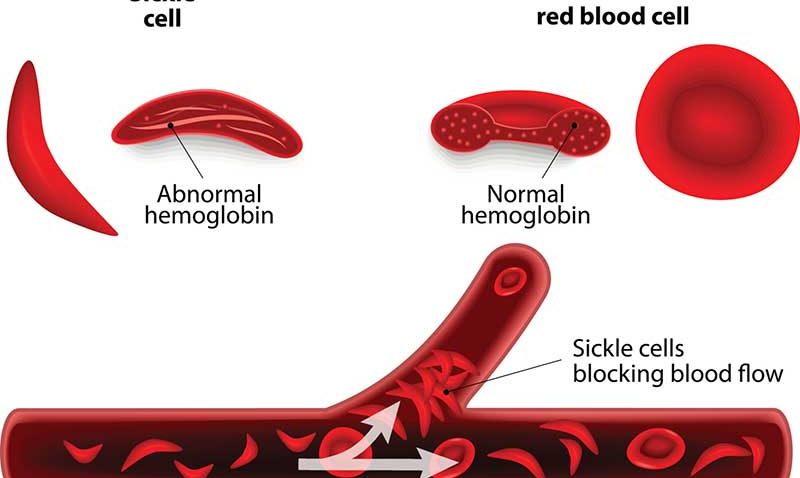
 Living with sickle cell anemia presents numerous long-term challenges and there often aren’t methods for treating it. Fortunately, people living with sickle cell anemia in Florida now have access to legal medical marijuana, which can be effective in treating the condition. Even though medical marijuana isn’t necessarily a cure for sickle cell anemia, using it properly can have a dramatic increase in quality of life. Continue reading below for some specific insights on why medical marijuana can be vital in helping to treat sickle cell anemia.
Treating Chronic Pain Caused by Sickle Cell Anemia
With sickle cell anemia, the chronic pain it causes is one of the biggest reasons why it’s so difficult to live with. Chronic pain can make it nearly impossible to function, as things like getting a full-night’s sleep become harder than it should be. One of the main reasons why medical marijuana is an effective resource in helping to treat medical marijuana is because of its ability to relieve chronic pain. In fact, there’s an abundance of research that backs the efficacy of medical marijuana as a resource for reducing chronic pain. There are a variety of methods of medical marijuana consumption that can relieve chronic pain and don’t involve inhalation. Those methods include topicals, tinctures, and edibles. One of the reasons why medical marijuana is so helpful with alleviating pain is because of its anti-inflammatory qualities. Those qualities do far more than relieve pain.
Continue reading to learn more.
The Effects of Medical Marijuana Can Reduce Swelling and Prevent A Stroke
Living with sickle cell anemia presents numerous long-term challenges and there often aren’t methods for treating it. Fortunately, people living with sickle cell anemia in Florida now have access to legal medical marijuana, which can be effective in treating the condition. Even though medical marijuana isn’t necessarily a cure for sickle cell anemia, using it properly can have a dramatic increase in quality of life. Continue reading below for some specific insights on why medical marijuana can be vital in helping to treat sickle cell anemia.
Treating Chronic Pain Caused by Sickle Cell Anemia
With sickle cell anemia, the chronic pain it causes is one of the biggest reasons why it’s so difficult to live with. Chronic pain can make it nearly impossible to function, as things like getting a full-night’s sleep become harder than it should be. One of the main reasons why medical marijuana is an effective resource in helping to treat medical marijuana is because of its ability to relieve chronic pain. In fact, there’s an abundance of research that backs the efficacy of medical marijuana as a resource for reducing chronic pain. There are a variety of methods of medical marijuana consumption that can relieve chronic pain and don’t involve inhalation. Those methods include topicals, tinctures, and edibles. One of the reasons why medical marijuana is so helpful with alleviating pain is because of its anti-inflammatory qualities. Those qualities do far more than relieve pain.
Continue reading to learn more.
The Effects of Medical Marijuana Can Reduce Swelling and Prevent A Stroke
Sickle cell anemia can cause an inflamed circulatory system, causing numerous side-effects. Those side effects include swelling in the extremities, along with an increased risk of stroke. Additionally, people living with the condition live with the potential risk of suffering from damage to internal organs. Given the risks that inflammation causes people living with sickle cell anemia, having access to anti-inflammatories could be necessity. Fortunately, medical marijuana has been proven to serve as an anti-inflammatory. There’s a wide variety of products on sale at medical marijuana dispensaries that can help reverse the effects of inflammation. Especially for people who experience swelling as a result of sickle cell anemia, medical marijuana can help reduce it.
Anxiety and Depression Caused by Sickle Cell Anemia
Florida patients living with sickle cell anemia may develop mental health conditions, like depression and anxiety. There’s no concrete cure for sickle cell anemia, and making matters even more complicated, the only potential cure is a bone marrow transplant which isn’t a guaranteed cure and can be difficult to obtain. Also, not many people understand what living with the condition is like, thus placing a strain on some social relationships. Patients seeking relief from anxiety and depression caused by other medical conditions could benefit from a medical marijuana card and treatment in Florida. In fact, low dose THC has grown largely due to the fact that it helps people overcome feelings of anxiety. Obtaining medical marijuana for anxiety or depression caused by sickle cell anemia is fairly simple.
Call (800) 250-6737 with any questions and to book your appointment
Medical marijuana is a term for derivatives of the Cannabis sativa plant that are used to ease symptoms caused by certain medical conditions. Medical marijuana is also known as medical cannabis.
When is medical marijuana appropriate?
Studies report that medical cannabis has possible benefit for several conditions. State laws vary in which conditions qualify people for treatment with medical marijuana. If you’re considering marijuana for medical use, check your state’s regulations.
Depending on the state, you may qualify for treatment with medical marijuana if you meet certain requirements and have a qualifying condition, such as:
- Alzheimer’s disease
- Amyotrophic lateral sclerosis (ALS)
- HIV/AIDS
- Crohn’s disease
- Epilepsy and seizures
- Glaucoma
- Multiple sclerosis and muscle spasms
- Severe and chronic pain
- Severe nausea or vomiting caused by cancer treatment
Is medical marijuana safe?
Further study is needed to answer this question, but possible side effects of medical marijuana may include:
- Increased heart rate
- Dizziness
- Impaired concentration and memory
- Slower reaction times
- Negative drug-to-drug interactions
- Increased risk of heart attack and stroke
- Increased appetite
- Potential for addiction
- Hallucinations or mental illness
- Withdrawal symptoms
Some medical marijuana is formulated to provide symptom relief without the intoxicating, mood-altering effects associated with recreational use of marijuana.
What is THC?
THC, also called tetrahydrocannabinol, is the compound in cannabis that is psychoactive and gives you the feeling of being high. However, THC’s chemical compounds is very similar to its counterpart, CBD, which actually combats the effects of THC. Still, THC mimics the natural chemical anandamide (which is produced in the brain) in structure, altering the function in communication. So, instead of normal brain communication via neurons, the THC compound attaches to the neurons and changes the process. According to the National Institute on Drug Abuse (NIDA), THC affects things like thinking, memory, pleasure, movements, concentration, coordination, and sensory and time perception. For these reasons, doing things like operating heavy machinery or driving while under the influence of the drug may be dangerous.
THC vs. CBD
Despite the two compounds having almost exact chemical makeups and being part of those that make up cannabis, THC and CBD act rather differently. THC is the psychoactive component in marijuana that gives you the feeling of being high – however, CBD acts as a counterbalance to the effects of THC. While THC induces drowsiness and gives you that body-high, CBD can actually increase energy. CBD can often help moderate THC’s effects by reducing anxiety or stress. You can also learn more about how CBD and THC are different here.
THC Side Effects
Still, despite a variety of uses that have many doctors, producers, and investors optimistic, THC may have some negative side effects that ought to be considered.
In 2017, the National Academies of Sciences, Engineering and Medicine released a study on the health benefits and effects of cannabis. Among the experts who contributed to the study was Dr. William Checkley, M.D., Ph.D. from Johns Hopkins University. As an associate professor at Johns Hopkins as well as a pulmonary and critical care specialist, Dr. Checkley claims there may be more negative effects of THC than many experts believe.
Effects On Teenage Brain
It has been proven beyond doubt that frequent marijuana use damages the brains of teenagers and young adults. Throughout adolescence and into the mid-20s, the brain continues to develop in ways that are critical for higher-order thinking and executive functioning (memory, reasoning, problem solving). White matter, which is important for neural efficiency, increases in quality and volume into the early 30s. Given that adolescence is such an important developmental period for the brain, exposure to drugs during this time has a greater impact on the brain than it does during adulthood.
Call (800) 250-6737 with any questions and to book your appointment
Medical marijuana users claim the drug helps relieve pain and suppress nausea the two main reasons it’s often used to relieve the side effects of chemotherapy. Researchers at Harvard Medical School suggested that that some of the drug’s benefits may actually be from reduced anxiety, which would improve the smoker’s mood and act as a sedative in low doses. Beware, though, higher doses can increase anxiety and make you paranoid. A study, published in the journal Molecular Pharmaceutics, found that THC, the active chemical in marijuana, slows the formation of amyloid plaques by blocking the enzyme in the brain that makes them. These plaques seem to be what kill brain cells and potentially cause Alzheimer’s. A synthetic mixture of CBD and THC seem to preserve memory in a mouse model of Alzheimer’s disease. Another study suggested that in population-based studies, a THC-based prescription drug called dronabinol was able to reduce behavioral disturbances in dementia patients. Marijuana may ease painful symptoms of multiple sclerosis, a study published in the Medical Association Journal in May suggests.
Medical Marijuana Helps Multiple Sclerosis
A researcher studied multiple sclerosis patients with painful contractions in their muscles. These patients didn’t respond to other treatments, but after smoking marijuana for a few days they reported that they were in less pain. The THC effects happens when the pot binds to receptors in the nerves and muscles to relieve pain. Other studies suggest that the chemical also helps control the muscle spasms. Other types of muscle spasms respond to marijuana as well. Gupta also found a teenager who was using medical marijuana to treat diaphragm spasms that were untreatable by other, prescribed and very strong, medications. Treatment for hepatitis C infection is harsh negative side effects include fatigue, nausea, muscle aches, loss of appetite, and depression and lasts for months. Many people aren’t able to finish their treatment course because of the side effects.
Medical Marijuana and HEP C
A 2006 study in the European Journal of Gastroenterology and Hepatology found that 86% of patients using marijuana successfully completed their Hep C therapy, while only 29% of non-smokers completed their treatment, possibly because the marijuana helps lessens the treatments side effects. Marijuana also seems to improve the treatment’s effectiveness: 54% of hep C patients smoking marijuana got their viral levels low and kept them low, in comparison to only 8% of nonsmokers. Researchers from rheumatology units at several hospitals gave their patients Sativex, a cannabinoid-based pain-relieving medicine. After a two-week period, people on Sativex had a significant reduction in pain and improved sleep quality compared to placebo users. A note of caution, though, a recent study in Arthritis Care & Research suggests there isn’t enough evidence to back up the use of marijuana for these kinds of diseases, mostly because there aren’t comprehensive studies on the side effects and little regulation of dosage and consistency in the chemical make up of medical marijuana. They studied their body’s response to eating sugars: their levels of the hormone insulin and their blood sugar levels while they hadn’t eaten in nine hours, and after eating sugar. Not only were the pot users skinnier, but their body had a healthier response to sugar. Contrary to stoner stereotypes, marijuana usage has actually been shown to have some positive mental effects, particularly in terms of increasing creativity. Even though people’s short-term memories tend to function worse when high, people get better at tests requiring them to come up with new ideas. Other researchers have found that some participants improve their “verbal fluency,” their ability to come up with different words, while using marijuana. Part of this increased creative ability may come from the release of dopamine in the brain, lessening inhibitions and allowing people to feel more relaxed, giving the brain the ability to perceive things differently.
Medical Marijuana Treats PTSD
Marijuana is approved to treat PTSD in some states already PTSD is the number one reason for people to get a license for medical marijuana. Naturally occurring cannabinoids, similar to THC, help regulate the system that causes fear and anxiety in the body and brain. But there are still questions about the safety of using marijuana while suffering from PTSD, which this study will hopefully help answer.
What Conditions Can Medical Marijuana Help With
Research shows that marijuana may help protect the brain from damage caused by stroke, by reducing the size of the area affected by the stroke at least in rats, mice, and monkeys. This isn’t the only research that has shown neuroprotective effects from cannabis. Some research shows that the plant may help protect the brain after other traumatic events, like concussions. There is some evidence that marijuana can help heal the brain after a concussion or other traumatic injury. A recent study in the journal showed that in mice, marijuana lessened the bruising of the brain and helped with healing mechanisms after a traumatic injury. Harvard professor emeritus of psychiatry and marijuana advocate recently wrote an open letter to saying they should stop testing players, and that the league should start funding research into the plant’s ability to protect the brain.
Medical Marijuana and Epilepsy
The use of cannabis to treat epilepsy and other neurological conditions has been studied for a number of years. It has been hotly debated too. On June 25, 2018, the U.S. Food & Drug Administration (FDA) approved EPIDIOLEX (cannabidiol, CBD) oral solution for the treatment of seizures associated with two epilepsy syndromes. Lennox-Gastaut syndrome and Dravet syndrome – in people two years of age or older. Epidiolex represents a new medication option for children with these types of epilepsy. It is also the first ever FDA approved medication to treat seizures in Dravet syndrome. Studies conducted by researchers at Virginia Commonwealth University indicate that marijuana may stop seizures. The FDA approval of Epidiolex will soon bring to market the first plant-based drug derived from the cannabis plant in the U.S. Before it can be distributed on the market, the Drug Enforcement Administration (DEA) must place it on the Drug Schedule and states must create a pathway for it.
Medical Marijuana and AIDS/HIV
In a human study of 10 HIV-positive marijuana smokers, scientists found people who smoked marijuana ate better, slept better and experienced a better mood. Another small study of 50 people found patients that smoked cannabis saw less neuropathic pain.
Medical Marijuana and Alzheimer’s
Medical marijuana and some of the plant’s chemicals have been used to help Alzheimer’s patients gain weight, and research found that it lessens some of the agitated behavior that patients can exhibit. In one cell study, researchers found it slowed the progress of protein deposits in the brain. Scientists think these proteins may be part of what causes Alzheimer’s, although no one knows what causes the disease.
Medical Marijuana and Arthritis
A study of 58 patients using the derivatives of marijuana found they had less arthritis pain and slept better. Another review of studies concluded marijuana may help fight pain-causing inflammation.
Medical Marijuana and Asthma
Studies are contradictory, but some early work suggests it reduced exercise-induced asthma. Other cell studies showed smoking marijuana could dilate human airways, but some patients experienced a tight feeling in their chests and throats. A study in mice found similar results.
Medical Marijuana and Cancer
Animal studies have shown some marijuana extracts may kill certain cancer cells. Other cell studies show it may stop cancer growth, and with mice, THC, the psychoactive ingredient in marijuana, improved the impact of radiation on cancer cells. Marijuana can also prevent the nausea that often accompanies chemotherapy treatment used to treat cancer.
Medical Marijuana and Chronic pain
Some animal and small human studies show that cannabinoids can have a “substantial analgesic effect.” People widely used them for pain relief in the 1800s. Some medicines based on cannabis such as Sativex are being tested on multiple sclerosis patients and used to treat cancer pain. The drug has been approved in Canada and in some European countries. In another trial involving 56 human patients, scientists saw a 30% reduction in pain in those who smoked marijuana.
Medical Marijuana and Crohn’s disease
In a small pilot study of 13 patients watched over three months, researchers found inhaled cannabis did improve life for people suffering from ulcerative colitis and Crohn’s disease. It helped ease people’s pain, limited the frequency of diarrhea and helped with weight gain.
Medical Marijuana and Glaucoma
Glaucoma is one of the leading causes of blindness. Scientists have looked at THC’s impact on this disease on the optic nerve and found it can lower eye pressure, but it may also lower blood pressure, which could harm the optic nerve due to a reduced blood supply. THC can also help preserve the nerves, a small study found.
Medical Marijuana and Multiple sclerosis
Using marijuana or some of the chemicals in the plant may help prevent muscle spasms, pain, tremors and stiffness, according to early-stage, mostly observational studies involving animals, lab tests and a small number of human patients. The downside is it may impair memory, according to a small study involving 20 patients.
Side Effects From Medical Marijuana
Marijuana does have side effects. THC binds to cannabinoid receptors, which are concentrated in areas of the brain associated with thinking, memory, pleasure, coordination and time perception. The effects of marijuana can interfere with attention, judgment and balance. Studies have produced conflicting results on whether smoking marijuana carries a significant cancer risk. Medical marijuana “prescriptions” are termed “recommendations” or “referrals” because of federal laws prohibiting the prescribing of cannabis.
Additional Information
In a placebo-controlled, 2007 study they found that marijuana is effective at reducing neuropathic pain, or pain caused by damaged nerves, in HIV patients. Opiates, such as morphine, aren’t effective at treating that sort of pain. Researchers at the American Academy of Neurology have also found that medical marijuana in the form of pills or oral sprays seemed to reduce stiffness and muscle spasms in multiple sclerosis (MS). The medications also eased certain symptoms of MS, such as pain related to spasms, and painful burning and numbness, as well as overactive bladder, according to a number of studies.