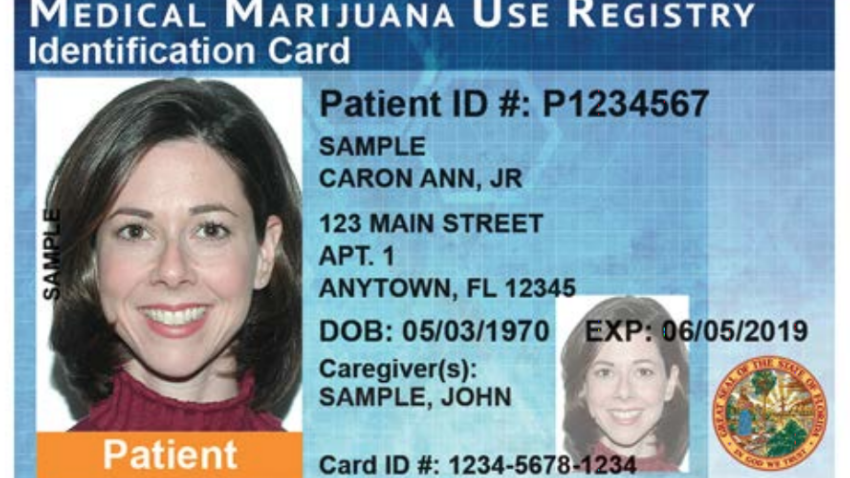
 Before you can buy cannabis from a medical marijuana dispensary in Florida, you must first visit a licensed physician who is certified to prescribe medical marijuana after having completed the mandatory education requirements laid out by the State of Florida. The licensed marijuana doctor will then determine if you fall within the eligibility criteria to purchase medical marijuana. Once deemed eligible for a card by a doctor that is certified for medical marijuana you have to finalize the steps needed for a medical marijuana card in Fort Myers FL. The physicians at All Natural MD Fort Myers will assist you with every step of the process. Our address and google map information is listed below for your convivence.
All Natural MD Fort Myers
5237 Summerlin Commons Blvd. Suite V388,
Fort Myers, FL 33907
Get Directions
The cost is $75 for the for the Florida medical marijuana card per year. There is a $2.75 processing fee. The physician’s fee is $200 to $300, and is in addition to the state fee for your medical card. Your medical marijuana certification is only good for 210 days.
Before you can buy cannabis from a medical marijuana dispensary in Florida, you must first visit a licensed physician who is certified to prescribe medical marijuana after having completed the mandatory education requirements laid out by the State of Florida. The licensed marijuana doctor will then determine if you fall within the eligibility criteria to purchase medical marijuana. Once deemed eligible for a card by a doctor that is certified for medical marijuana you have to finalize the steps needed for a medical marijuana card in Fort Myers FL. The physicians at All Natural MD Fort Myers will assist you with every step of the process. Our address and google map information is listed below for your convivence.
All Natural MD Fort Myers
5237 Summerlin Commons Blvd. Suite V388,
Fort Myers, FL 33907
Get Directions
The cost is $75 for the for the Florida medical marijuana card per year. There is a $2.75 processing fee. The physician’s fee is $200 to $300, and is in addition to the state fee for your medical card. Your medical marijuana certification is only good for 210 days.
 Not to by confused with your medical card, you have to renew your certification/recommendation orders every 210 days/7 months. You will want to contact and or visit one of our many locations including All Natural MD Fort Myers medical marijuana doctor for a reevaluation so that your recommendation orders with the state registry remain current. Call (800) 250-6737 today.
Related Article Here
Not to by confused with your medical card, you have to renew your certification/recommendation orders every 210 days/7 months. You will want to contact and or visit one of our many locations including All Natural MD Fort Myers medical marijuana doctor for a reevaluation so that your recommendation orders with the state registry remain current. Call (800) 250-6737 today.
Related Article Here
What’s the Recommended Dose of CBD?
There aren’t enough clinical studies to highlight a specific dosage range for Parkinson’s disease. However, there’s a lot of research on the use of CBD use for other neurodegenerative diseases, such as multiple sclerosis. Heavy doses of CBD are usually required to produce benefits for these conditions. The medical marijuana doctors at All Natural MD recommend 300-500 mg every 8 hours. Call or schedule your appointment online for a Florida medical marijuana card today.
What is Parkinson’s Disease
Parkinson’s disease is a neurodegenerative disorder that progressively causes neurons to die. One function of neurons is to create a neurotransmitter called dopamine, a chemical messenger responsible for sending messages between neural cells in the brain. Parkinson’s disease primarily affects dopamine-producing neurons in an area of the brain called the substantia nigra, causing critically low levels of dopamine that negatively affect motor function. The result of this is a gradual loss of motor control, with symptoms starting gradually, usually with a noticeable tremor in just one hand. However, people with Parkinson’s disease also often exhibit emotional and behavioral changes, including sleeping problems and depression. Taken together, this makes Parkinson’s a debilitating disease that affects the patient, but also those around them. Click here for more information on getting a Florida medical marijuana card.
Symptoms of Parkinson’s Disease
People with Parkinson’s typically start experiencing symptoms in the later stages of the disease, after a significant number of neurons have been damaged or lost. Symptoms develop slowly over multiple years, and they differ from person to person. Because symptoms often differ from one person to the next, not all symptoms listed below are necessary for a Parkinson’s diagnosis. Younger people in particular may only exhibit one or two of these symptoms, especially in the earlier stages of the disease.
Parkinson’s Disease Medications & Treatment
There is no cure for Parkinson’s disease. Because symptoms don’t exhibit themselves until the later stages of the disease, early diagnosis is difficult but scientists continue to search for ways to identify the early onset of Parkinson’s. While no treatment options currently available can slow or halt the progress of Parkinson’s disease, there are treatments available to improve its symptoms.
Pharmaceutical Interventions
Almost all Parkinson’s patients will eventually require medication to treat their motor symptoms. Several classes of medications are available, and often patients will be prescribed various strengths, formulations, and combinations of medications to improve their symptoms. These include:
Levodopa works by being converted to dopamine in the brain. Side-effects include nausea, usually requiring it to be taken with carbidopa. If symptoms return between doses (OFF periods) an infusion of levodopa that is administered through a tube called duopa, a powder form of levodopa which can be inhaled, or the new medication istradefylline (Nourianz) may be prescribed. Levodopa treatments are often delayed as long as possible as its effects wear off over time and it eventually stops working, causing the patient to develop movement problems called “motor fluctuations”.
Safinamide (Xadago) is prescribed when patients taking levodopa and carbidopa have a breakthrough of Parkinson’s symptoms that were previously under control. Side effects include trouble falling or staying asleep, nausea, falls, and uncontrolled, involuntary movements.
Dopamine agonists that imitate the action of dopamine in the brain to treat the motor symptoms of Parkinson’s disease. Examples include pramipexole, rot ropinirole and igotine that can be taken on their own or with levodopa. Side effects can include nausea, orthostatichypotension, hallucinations, somnolence, and impulse control disorders.
Non-Pharmaceutical Interventions
The most common non-pharmaceutical interventions include lifestyle changes that can help slow disease progression and make symptoms more manageable. These include eating a healthy diet and a proper exercise program to help maximize the potential of medications, increase energy, and promote general health and well-being in Parkinson’s patients.
Physical, occupational and speech therapies can help with walking and gait issues, fine motor skills, and speech and language issues that may arise with Parkinson’s disease while deep brain stimulation (DBS) may improve symptoms in certain patients.
If you or someone you know is suffering from Parkinson’s Disease and could use the benefits of medical marijuana, please contact one of All Natural MD’s locations in Florida to get started on your medical marijuana card and doctors recommendations all in one short visit. Contact All Natural MD today (800) 250-6737 or visit our website floridasmedicalmarijuana.com. We have locations in Orlando, Brandon, Tampa, Lakeland, Sarasota, Bradenton and more.
Autism is one of the fastest growing developmental disorders in the U.S., with 1 in 70 children facing an autism diagnosis. Diagnoses for autism are more common in males, where statistics are showing that 1 in 50 males experience this disorder. Prevalence of this disorder is only increasing over the years. As the medical marijuana movement continues on, the use of marijuana as a treatment for aspects of autism is coming to the forefront. Could marijuana hold promise for those suffering from autism and their families? Since autism presents differently in different people and can take different forms, the disorder is often referred to as a “spectrum” to describe the wide variations in challenges and strengths that people with autism have. As professionals working alongside prescribing doctors and cannabis dispensaries, All Natural MD and its staff of medical marijuana doctors in Florida has been able to witness the way that marijuana can benefit those with a number of diseases, disorders and medical issues. As an organization that derives much of its work from our personal experiences with autism, we’ve been encouraged to see the emerging discourse surrounding cannabis and autism, however slow.
According to the organization Autism Speaks, autism, or autism spectrum disorder, refers to a range of conditions characterized by challenges with social skills, repetitive behaviors, speech and nonverbal communication, as well as by unique strengths and differences. It’s believed that autism is caused by different genetic and environmental influences. At present, there is no early detection or cure for autism, leaving families to treat their children with strong antipsychotic drugs that have strong side effects for the user that include sleepiness, tremors, focus issues, depression and weight gain. People are wanting different options for medications for the loved ones with autism, and are now looking to marijuana.
Finding that he was being asked time and time again about the connection between cannabis (more specifically CBD or cannabidiol) and autism, one pediatric neurologist began his own observational study where he observed 60 of autistic patients using cannabis oil ranging from ages 5-30. He saw a great improvement in most of his patients, with many of them lessening the degree to which they were self-harming, and many becoming more communicative. These observational results prompted him to call for a full-blown clinical study. The study, which launched earlier this year in Jerusalem and is expected to end and will include 120 low- to medium-functioning autistic individuals between the ages of 5 and 30 and will focus on behavior and communication, and how those are impacted by cannabis oil. The autism community will be eager to see the results of this study, and if and how they are eventually replicated in the United States.
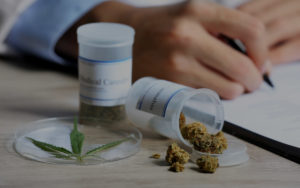
Like many of the observational and clinical studies on CBD, the endocannabinoid receptors in the human body are showing to be effective in repairing the way the brain sends signals and improves cell function. Other studies support that cannabis can contribute to significant improvements in hyperactivity, lethargy, irritability, and compulsions towards inappropriate speech. Many who study autism believe that the condition is caused by a disruption of the brain’s ability to send clear signals and are encouraged by what evidence is available. The gains that have been made in recent years in studying both the endocannabinoid system and autism has been what has led to the increased desire of clinicians to study marijuana for autism. Their efforts demonstrate the hope that data comes out in favor of cannabis significantly impacting behavior and communications with those with autism.
All Natural MD is a medical marijuana doctors group that offers medical marijuana cards to qualified patients in the State of Florida. Contact us or find one of our locations nearest to you. (800) 250-6737.